

Learn More About Us
BAIL APPLICATIONS
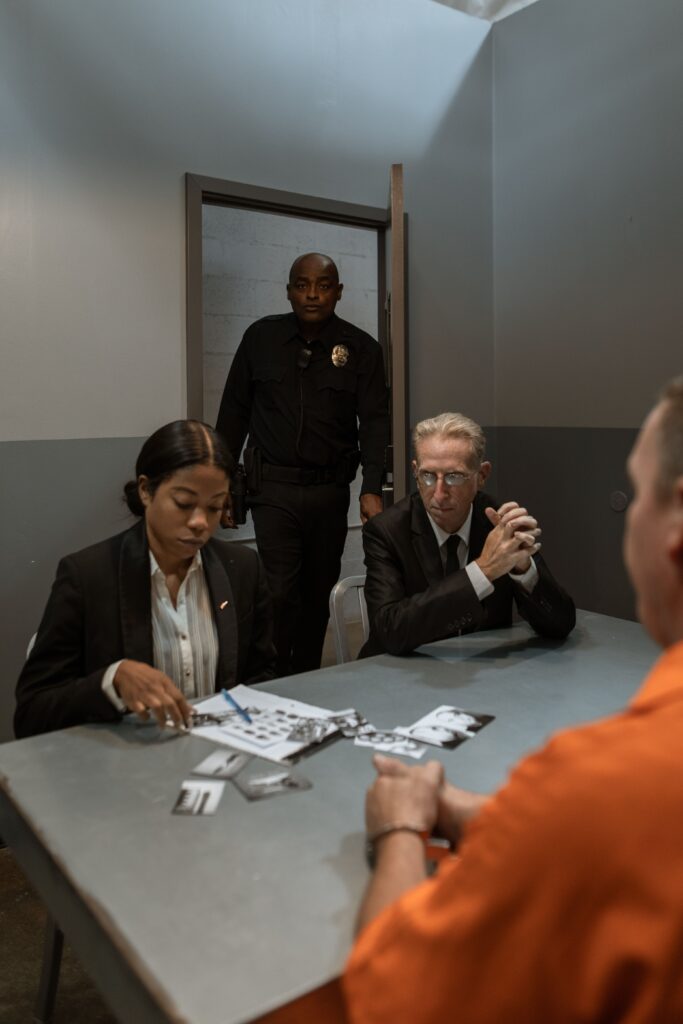

BAIL APPLICATIONS
Bail is a legal undertaking that allows a person charged with a criminal offence to remain in the community while their case is being dealt with by the courts. In simple terms, it is a promise to attend court on the required dates and comply with any conditions imposed.
If you have been charged with an offence, being granted bail means you can return home and continue your daily life while awaiting your court hearing, rather than remaining in custody. Bail may be granted by police or by a court at various stages of the criminal justice process.
In some cases, bail may be refused, particularly where the alleged offence is serious, there is a risk of further offending, or there are concerns that the accused may fail to appear in court.
Bail is often granted subject to conditions designed to ensure compliance with the law and attendance at court. These conditions may include:
- Reporting regularly to a police station.
- Residing at a specified address.
- Surrendering a passport.
- Observing a curfew.
- Avoiding contact with certain people or locations.
One of the most important bail conditions is that you must not commit any further offences while on bail. Breaching your bail conditions can result in your bail being revoked and may negatively affect the outcome of your case.
At Bamyan Law Group, we can assist with bail applications, bail variations, and urgent court appearances to help protect your rights and secure the best possible outcome.
Interested in arranging a consultation?
Our lawyers are happy to set up a consultation to review your individual case and
needs. If you would like to work with us, contact us to get started.

What Is Assault in Queensland?
Under section 245 of the Criminal Code Act 1899 (Qld), an assault occurs where a person:
- Directly or indirectly applies force to another person without their consent, or
- Threatens to apply force, causing the other person to fear immediate and unlawful violence.
Importantly, assault does not require a person to suffer physical injury. A person can be charged with assault even where there are no visible injuries or marks.
Examples of conduct that may constitute assault include:
- Pushing, grabbing, or striking another person.
- Spitting on another person.
- Raising a fist in a threatening manner.
- Making threats that cause a person to fear immediate harm.
- Any unwanted physical contact.
Types of Assault Charges in Queensland
Assault offences can vary significantly in seriousness. Charges may include:
- Common assault.
- Assault occasioning bodily harm.
- Serious assault.
- Assaults involving weapons or aggravating circumstances.
- Assault-related domestic and family violence offences.
The potential penalty will depend on the nature of the allegation, the extent of any injuries, the circumstances of the incident, and the accused person’s history.
SKILLED INDEPENDENT VISA (SUBCLASS 189)
The Skilled Independent (Subclass 189) visa is a permanent residence visa allowing skilled workers to live and work anywhere in Australia without requiring sponsorship or nomination.
- Points-Tested Stream
Applicants are assessed based on a points system considering:
- Skills and qualifications
- English language proficiency
- Skilled work experience
- Other relevant factors
Eligibility requirements:
- Occupation must be listed on the relevant skilled occupation list
- Obtain a positive skills assessment
- Achieve a minimum of 65 points (noting that higher scores are typically required for invitation)
- Submit an EOI and receive an invitation
- Be under 45 years of age at the time of application
- Meet English, health, and character requirements
Invitations are issued periodically, and minimum points thresholds vary depending on occupation and demand.
- New Zealand Stream
This stream provides a pathway to permanent residence for eligible New Zealand citizens.
Eligibility requirements:
- Hold a Special Category (Subclass 444) visa
- Have resided in Australia continuously for at least 5 years
- Have commenced residence on or before 19 February 2016
- Meet applicable income thresholds (unless exempt)
- Satisfy health and character requirements


SKILLED NOMINATED VISA (SUBCLASS 190)
The Skilled Nominated (Subclass 190) visa is a permanent residence visa requiring nomination by an Australian state or territory government.
Key features:
- Applicants receive an additional 5 points for nomination
- Requires a commitment to live and work in the nominating state or territory (Generally for at least 2 years)
- Operates under the same points-tested framework as Subclass 189
Eligibility requirements:
- Occupation must be on the relevant skilled occupation list
- Submit an EOI and receive an invitation
- Obtain nomination from a state or territory government
- Meet specific nomination criteria set by the relevant jurisdiction
- Achieve at least 65 points (higher scores may be required in practice)
- Obtain a positive skills assessment
- Be under 45 years of age
- Meet English, health, and character requirements

SKILLED WORK REGIONAL (PROVISIONAL) VISA (SUBCLASS 491)
The Skilled Work Regional (Provisional) (Subclass 491) visa is a provisional visa valid for up to 5 years. It is designed to encourage skilled migration to regional areas of Australia.
Applicants may be nominated by a state or territory government or sponsored by an eligible relative residing in a designated regional area.
Key features:
- Provides a pathway to permanent residence through the Permanent Residence (Skilled Regional) (Subclass 191) visa
- Requires living and working in regional Australia
Eligibility requirements:
- Occupation must be on the relevant skilled occupation list
- Submit an EOI and receive an invitation
- Be nominated by a state/territory or sponsored by an eligible relative
- Achieve at least 65 points (higher thresholds may apply)
- Meet any additional state or territory nomination requirements
- Be under 45 years of age at the time of application
- Meet English, health, and character requirements
EMPLOYER-NOMINATED SKILLED VISAS
Employer-nominated skilled visas enable Australian businesses to address labour shortages by sponsoring suitably qualified overseas workers for specific roles. Depending on the visa subclass, these visas may be temporary or permanent and require a formal nomination by an approved Australian employer.
Skills in Demand Visa (Subclass 482)
The Subclass 482 visa is a temporary work visa that allows skilled workers to live and work in Australia for an approved sponsoring employer for up to four years, depending on the occupation and visa stream.
Applications must be supported by an approved sponsor and a valid nomination lodged with the Department of Home Affairs.
Eligibility Criteria
To qualify for the Subclass 482 visa, the applicant must:
- Be nominated for an occupation listed on the relevant occupation list
- Be sponsored by an approved Australian employer
- Have at least one year of relevant full-time work experience in the nominated occupation (or a closely related field) within the last five years
- Hold the relevant qualifications or equivalent experience required for the role
- Obtain a positive skills assessment, where applicable
- Demonstrate competent English language proficiency
- Meet health and character requirements
Key Benefits
- No age restriction applies to this visa subclass
- Ability to live and work in Australia in the nominated occupation
- Travel flexibility, allowing multiple entries during the visa validity period
- Access to a pathway to permanent residence, subject to meeting eligibility criteria (e.g., through employer-sponsored permanent visa options after a qualifying period)


EMPLOYER NOMINATION SCHEME (SUBCLASS 186) VISA
The Employer Nomination Scheme (Subclass 186) visa is a permanent residence visa that enables Australian employers to sponsor suitably qualified overseas workers to fill skilled positions where there is a demonstrated need.
Applications require both an approved employer nomination and a visa application submitted to the Department of Home Affairs.
TEMPORARY RESIDENCE TRANSITION (TRT) STREAM – SUBCLASS 186
The Temporary Residence Transition (TRT) stream provides a pathway to permanent residency for holders of eligible temporary work visas who have been employed by their sponsoring employer in Australia.
This stream is commonly used by applicants transitioning from the Skills in Demand visa (subclass 482) (formerly TSS visa).
Applications must be supported by an approved employer nomination lodged with the Department of Home Affairs.
Eligibility Criteria
To qualify under the TRT stream, the applicant must:
- Hold (or have recently held) an eligible temporary work visa, such as the Subclass 482
- Have been employed full-time by the sponsoring employer in the nominated occupation for the required period (generally at least 2–3 years, depending on current legislative settings)
- Be nominated by the same employer for a permanent position
- Demonstrate that they have performed the occupation at the required skill level
- Meet English language requirements (unless exempt)
- Be under 45 years of age at the time of application (subject to exemptions)
- Meet health and character requirements
Employer Requirements
The sponsoring employer must:
- Be an approved sponsor
- Nominate the applicant for a full-time, ongoing position
- Offer a salary that meets the market rate and complies with the Temporary Skilled Migration Income Threshold (TSMIT), where applicable
- Ensure that the terms and conditions of employment are no less favourable than those offered to Australian workers in equivalent roles
DIRECT ENTRY STREAM – SUBCLASS 186
The Direct Entry stream of the Employer Nomination Scheme (Subclass 186) visa provides a pathway to permanent residency for skilled workers who may not have worked in Australia previously, or who do not meet the requirements of the Temporary Residence Transition (TRT) stream.
This stream allows Australian employers to sponsor overseas workers directly from abroad or from within Australia, provided the applicant meets the prescribed skill and qualification thresholds.
Applications must be supported by an approved employer nomination lodged with the Department of Home Affairs.
Eligibility Criteria
- You must have the skills, qualifications and experience for the role
- You must be nominated by an Australian employer
- You must be paid a salary that matches the market rate for your role
- Your employment terms must be no less favourable than those offered to an equivalent Australian worker
- You must meet health and character requirements.
- Be under 45 years old when you apply for the visa
Employer Requirements:
The sponsoring employer must:
- Nominate the applicant for a full-time, ongoing position for at least 2 years
- Offer a salary that meets the market rate and complies with the Temporary Skilled Migration Income Threshold (TSMIT), where applicable
- Ensure that the terms and conditions of employment are no less favourable than those offered to Australian workers in equivalent roles
Key Benefits
- Immediate permanent residency upon visa grant
- Full work and study rights in Australia
- Access to Medicare
- Ability to include eligible family members in the application
- Eligibility to apply for Australian citizenship, subject to meeting residency requirements

SKILLED EMPLOYER SPONSORED REGIONAL (PROVISIONAL) VISA (SUBCLASS 494)
The Skilled Employer Sponsored Regional (Provisional) (Subclass 494) visa is a temporary visa that enables skilled workers to live and work in designated regional areas of Australia for up to five years.
This visa is designed to address labour shortages in regional Australia by allowing employers operating in regional areas to sponsor suitably qualified overseas workers.
- The Subclass 494 visa also provides a pathway to permanent residency, typically after three years, through the Permanent Residence (Skilled Regional) (Subclass 191) visa (subject to meeting income and residency requirements).
Applications must be supported by an approved employer nomination lodged with the Department of Home Affairs.
Eligibility Criteria
To be eligible for the Subclass 494 visa, the applicant must:
- Be under 45 years of age at the time of application (subject to limited exemptions, e.g. certain academics or high-income earners)
- Be nominated by an approved employer located in a designated regional area of Australia
- Have an occupation on the relevant skilled occupation list
- Obtain a positive skills assessment from the relevant assessing authority
- Have at least three years of relevant full-time work experience in the nominated occupation or a closely related field
- Demonstrate Competent English (e.g. IELTS score of at least 6 in each component or equivalent)
- Meet health and character requirements
Key Benefits
- Ability to live and work in regional Australia for up to five years
- Multiple travel rights, allowing entry and exit from Australia during the visa validity period
- Access to a clear pathway to permanent residency via the Subclass 191 visa, subject to eligibility
- Opportunity to gain valuable Australian work experience, strengthening long-term migration prospects
How Bamyan Law Group Can Help
Applying for an Australian Work Visa require careful preparation and detailed supporting evidence. At Bamyan Law Group, we can guide you through every stage of the process, assess your eligibility, prepare a strong application, and help you meet all sponsorship and evidentiary requirements.
Contact our team today to discuss your circumstances and take the first step towards building your future together in Australia.
Why Choose Bamyan Law Group?
We take the time to understand your circumstances, your challenges, and what you want to achieve. We work closely with you to make sure you have the best migration option outcome, with the right visa for your needs.
We’re compassionate, professional, and responsive—and you can depend on us to be with you every step of the way.
Our team of experienced lawyers and our case manager have years of experience in immigration law and are all highly qualified, so you’re in safe hands with Bamyan Law Group.